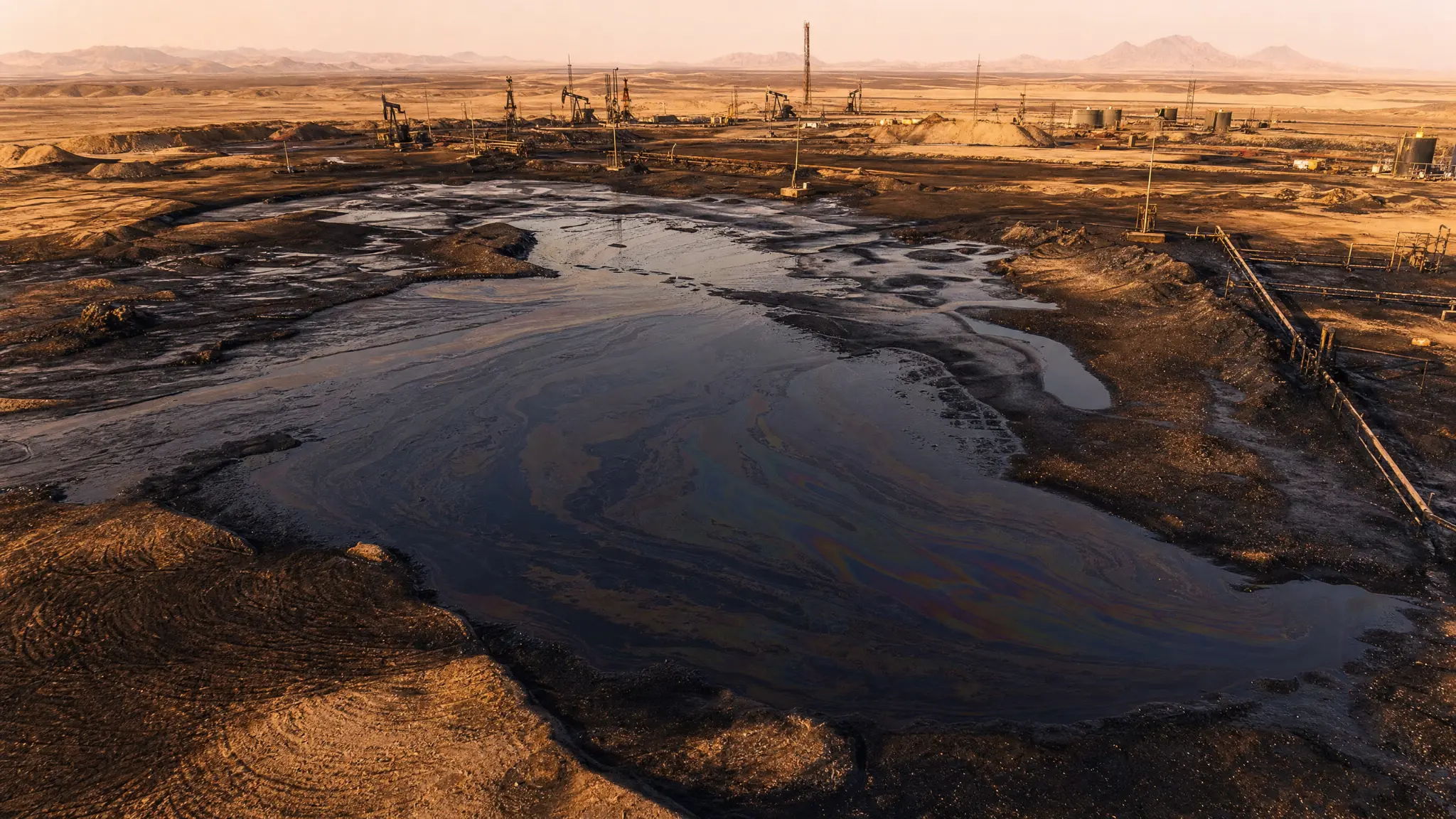
Hydrocarbon-contaminated land is not a problem that can be solved responsibly by selecting a technology from a catalogue. The right response begins with a site-specific question: which contaminants are present, where can they move, and which people, ecosystems or water resources could be affected? That risk-based starting point makes remediation more proportionate and more defensible. It also helps operators distinguish recoverable product from contamination that requires containment, treatment or long-term monitoring.
Build the site picture before choosing the remedy
A useful conceptual site model connects the source to pathways and receptors. It should bring together chemical results with information on soil structure, groundwater flow, buildings, drainage and land use. Petroleum hydrocarbons are complex mixtures rather than a single uniform substance, so a total petroleum hydrocarbon result alone may conceal important differences in mobility, volatility and toxicity. The assessment should therefore consider the relevant fractions and indicator compounds, alongside free product, dissolved contamination and vapour where those phases could occur.[2][3]
The practical test is not simply whether soil exceeds a generic number. It is whether a credible pollutant linkage exists and whether it matters at this site. Potential concerns include direct contact, dust or vapour inhalation, migration to groundwater, impacts on surface water and harm to ecological receptors. Sampling should be designed to test those linkages, not merely to produce an average concentration across an uncertain area.[1][2][3]
Use staged assessment, not optimistic assumptions
A staged approach can improve both protection and efficiency. An initial, conservative assessment can examine source concentrations or pore-water potential without taking credit for dilution or natural attenuation. More detailed modelling may then consider unsaturated-zone attenuation, groundwater dilution and downgradient transport, provided the underlying data justify those assumptions. The Environment Agency cautions that biodegradation rates must be relevant to the site’s geochemistry and hydrogeology; unsupported rates can overstate protection.[3]
For operators, this means that monitoring is part of the remedy rather than an afterthought. Define compliance points, collect data that tests the conceptual model and set decision triggers before relying on natural processes. Models can organise the evidence, but they do not replace professional judgement or the need to revisit assumptions when field results disagree with predictions.[3]
Match treatment to the contaminant and the ground
Treatment selection should reflect contaminant properties, soil permeability, depth, access, programme, end use and the likelihood of creating secondary emissions or waste streams. Containment may be appropriate where exposure can be reliably controlled. In-situ methods avoid excavation but depend heavily on contact between the treatment and the contaminated zone. Ex-situ options can provide tighter process control and physical separation, but excavation, handling, transport and treatment residues introduce their own risks.[1][4]
The available toolbox includes soil washing, vapour extraction, thermal treatment, bioremediation and chemical or physical treatments. Reviews describe separation and degradation as complementary rather than mutually exclusive: a recoverable oily phase may be separated first, followed by treatment of the remaining soil or water. The sensible choice is the treatment train that meets the site objective while controlling transfer to air, clean soil, surface water and groundwater. That conclusion is an engineering judgement, not a promise that one method will suit every hydrocarbon release.[1][4]
Recovery can be one part of a controlled response
Where assessment identifies concentrated oily materials, recovery can reduce the mass requiring downstream treatment and clarify what remains to be managed. It should still sit within a documented plan for sampling, segregation, water and vapour management, residual soil treatment and verification. The objective is not an impressive extraction figure in isolation; it is a demonstrable reduction in risk at the relevant receptors.[1][3][4]
Sources & further reading
Source publication dates below are distinct from this editorial’s date. Historical guidance is used for technical context, not as a statement of current legal requirements.
- Guidance for Cleaning Up Groundwater, Soil and Air at Hazardous Waste Cleanup FacilitiesUS Environmental Protection Agency · Date not stated
Explains protection of human health and the environment, direct and indirect exposure routes, and the range of in-situ and ex-situ soil treatment options; also highlights minimising contaminant transfers to air, clean soil, surface water and groundwater.
- Principles for Evaluating the Human Health Risks from Petroleum Hydrocarbons in Soils: A Consultation PaperEnvironment Agency · June 2003
Sets out the need for structured risk assessment across human health and other receptors and explains why petroleum hydrocarbons require attention to complex mixtures and differing toxicological properties.
- Remedial Targets MethodologyEnvironment Agency · 2006
Provides staged assessment concepts, conceptual site modelling, receptor identification and cautious treatment of dilution, attenuation and biodegradation assumptions, with professional judgement retained as essential.
- Cost reduction strategies in the remediation of petroleum hydrocarbon contaminated soilOpen Research Africa / PubMed Central · 8 April 2022
Reviews containment, separation and degradation approaches, including combinations of biological, physical and chemical processes, and explains how soil characteristics, cleanup level, location and project constraints influence technology choice.
Original AI-assisted commentary published by Slopoil. References do not imply endorsement or affiliation. This article is informational, not legal advice, a process specification or a guarantee of project performance.
Return to all insights