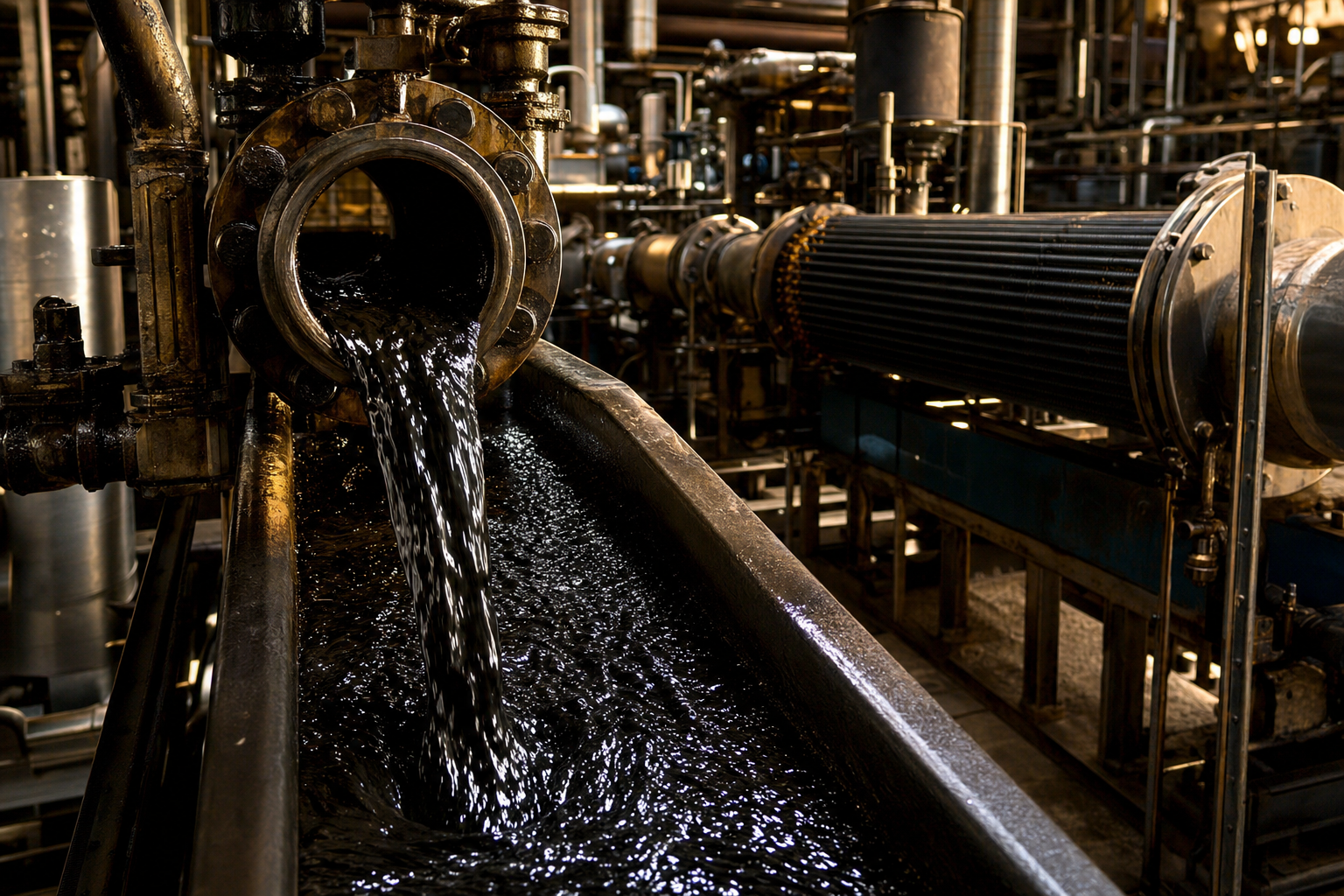
The waste hierarchy asks what value can still be retained in a difficult waste stream before treatment or disposal. For hydrocarbon-bearing residues, that matters because the material is rarely just oil: it may mix water, hydrocarbons, minerals and contaminants. The right response begins with characterisation, not with a label such as recycling or recovery.
A hierarchy of outcomes, not a branding exercise
The European waste hierarchy prioritises prevention, preparation for reuse, recycling, other recovery and, finally, disposal. Its purpose is to reduce harm and improve resource efficiency. Recycling reprocesses waste into products, materials or substances. Energy recovery instead uses waste to provide a useful function, normally by replacing another fuel or material input. Disposal is not recovery, even if some substance or energy is reclaimed as a secondary consequence.[1][2]
Separating hydrocarbons from water and solids is not automatically recycling, because the fraction has not necessarily been reprocessed into a new material. Nor is it energy recovery unless the principal purpose is use as fuel or an energy source. It is more accurately described as hydrocarbon recovery when a usable fraction is separated for a subsequent, authorised use. The description should follow the actual outcome and destination.[1]
Why oily residues need a different question
Oily sludge can arise from tank bottoms, oil-water separators and wastewater treatment, as well as exploration, production, transport and refining. Its composition changes with source and age. The literature identifies potentially toxic hydrocarbons and, in some streams, heavy metals or other contaminants. Containment and controlled handling therefore matter during assessment.[3]
For operators, the practical question is not simply ‘can this be recycled?’ It is ‘which fractions can be recovered, to what specification, and what remains?’ Characterisation may include moisture, solids, hydrocarbon fractions, chemical oxygen demand and metals. Dewatering reduces volume but does not itself remove hazardousness. A smaller residue is not necessarily safer.[3]
Recovery before energy use or disposal
Where separation retains a usable hydrocarbon fraction, it can preserve more of the original resource than sending mixed waste directly to combustion or disposal. Energy recovery has a legitimate place when it is the appropriate principal outcome, but it converts value into energy rather than retaining hydrocarbon as a material input. Residual solids or water may still require controlled management after recovery.[1][3]
Circular resource use should therefore be measured in stages: identify and separate what can be recovered, confirm that fraction’s intended use, then manage the remaining phases. This does not promise that every oily stream is recoverable. It avoids destroying potentially useful material before its condition and options are understood.
The operator’s decision point
The hierarchy is most useful when it changes the sequence of decisions: prevent avoidable contamination, characterise the waste, test recovery options, and then select energy recovery or disposal for what cannot be put to better use. EU guidance requires traceability and controls for hazardous waste through final recovery or disposal; a recovered stream does not remove that responsibility.[2]
Sources & further reading
Source publication dates below are distinct from this editorial’s date. Historical guidance is used for technical context, not as a statement of current legal requirements.
- Waste hierarchyEUR-Lex, European Union · Date not stated
Defines the hierarchy and distinguishes recycling, other recovery including energy recovery, and disposal by their principal outcomes.
- Waste Framework DirectiveEuropean Commission, Directorate-General for Environment · Date not stated
Explains the EU framework for waste, recovery and recycling, the preference for prevention, last-resort disposal, hazardous-waste controls and end-of-waste criteria.
- Trend in Research on Characterization, Environmental Impacts and Treatment of Oily Sludge: A Systematic ReviewMolecules / National Library of Medicine PubMed Central · 2022-11-12
Reviews oily sludge composition, environmental concerns, characterisation, phase separation, valorisation, fuel recovery and the limitations of dewatering and laboratory-scale treatment methods.
Original AI-assisted commentary published by Slopoil. References do not imply endorsement or affiliation. This article is informational, not legal advice, a process specification or a guarantee of project performance.
Return to all insights